Nvidia and Microsoft Just Built a New Chip to Run AI Directly on Your Windows PC — Here’s Why That’s a Big Deal
You just read about Microsoft putting AI agents in charge of your computer. Now meet the chip that will make those agents dramatically more powerful — without needing the internet to do it.
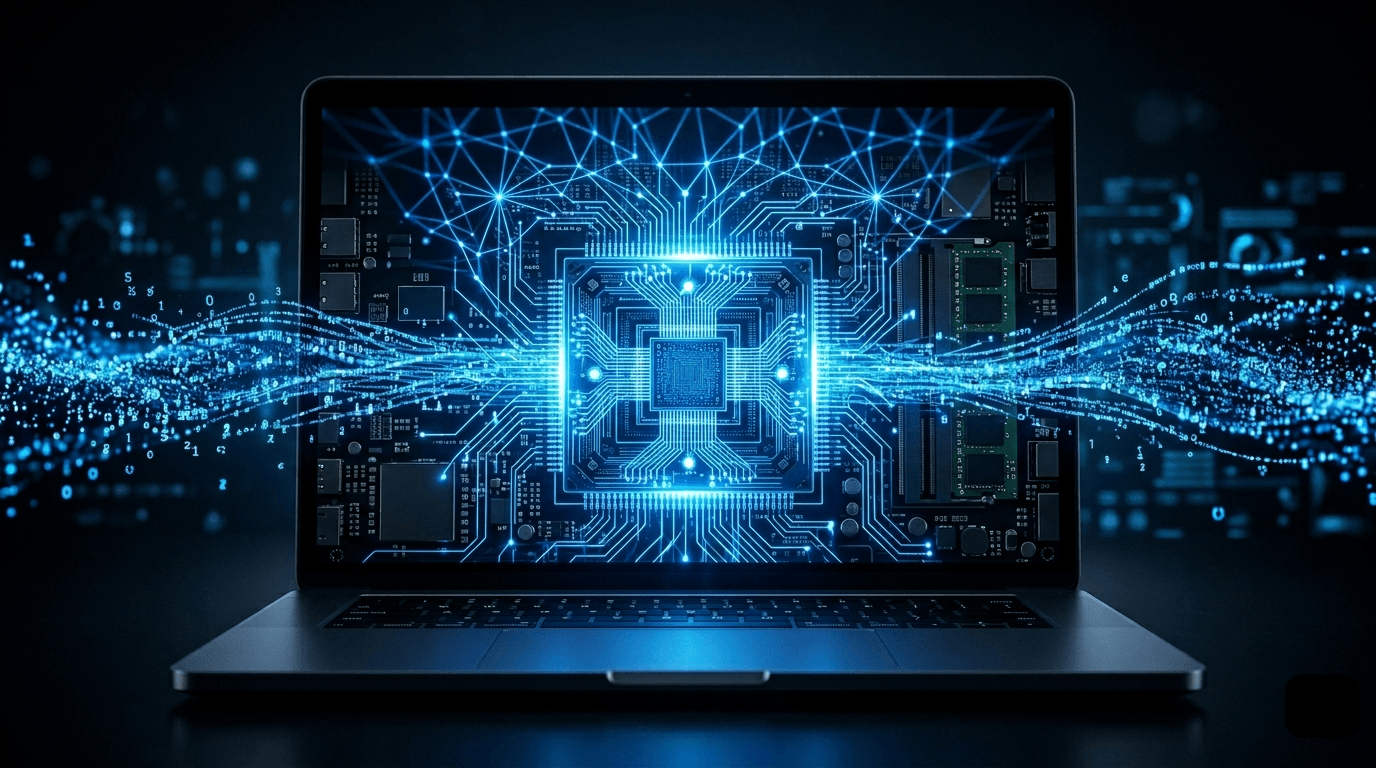
Nvidia — the company whose chips power virtually every major AI system on earth — has partnered with Microsoft to design a brand new processor specifically built to run AI directly on Windows PCs. No cloud connection required. No sending your data to a remote server. The AI lives on your machine, runs on your machine, and stays on your machine.
The chips are called the N1 and N1x and PC makers are already preparing to release the first Nvidia-powered Windows machines built around them. A cryptic tweet from Nvidia this week strongly suggests a formal announcement is imminent.
This is one of the most significant developments in personal computing in years. Here is exactly what it means for you.
What Are These Chips and What Makes Them Different?
To understand why this matters, you need to understand the difference between running AI in the cloud versus running AI locally on your device.
Right now, when you use ChatGPT, Microsoft Copilot, Google Gemini, or virtually any AI tool on your PC, your request travels from your computer to a massive data centre somewhere in the world, gets processed by enormous servers, and the result travels back to you. You are not running AI — you are borrowing time on AI infrastructure owned by someone else.
That model has three significant limitations. It requires a fast internet connection. It means your data — your documents, your queries, your private work — leaves your device every single time you use AI. And it costs the companies running those data centres enormous amounts of money in electricity and hardware, costs that ultimately get passed to you through subscription fees.
The N1 and N1x chips are designed to eliminate all three of those limitations by bringing the AI to you instead of sending you to the AI.
The N1 is the standard version — up to 16GB of RAM, running at 18 to 45 watts. This is the chip that will power mainstream Windows laptops and desktops. Efficient enough for everyday use, powerful enough to run capable AI agents locally without draining your battery or requiring a power socket.
The N1x is the professional powerhouse — up to 128GB of RAM, running at 45 to 80 watts. This is for workstations, creative professionals, developers, and power users who need to run complex, demanding AI tasks locally. 128GB of RAM is an extraordinary amount for a personal computer — it means the N1x can load and run AI models that previously required a dedicated server.
Why Does Running AI Locally Matter So Much?
This is the question at the heart of this story and it has three compelling answers.
Privacy. When AI runs locally on your device, your data never leaves your computer. The documents you ask AI to summarise, the emails you ask it to draft, the files you ask it to organise — none of that travels to a corporate server, gets stored in a database, or potentially ends up training someone else’s model. For individuals who handle sensitive personal information, and for businesses dealing with confidential data, this is transformational. Local AI is private AI by design.
Speed. Cloud AI has latency — the tiny delay between your request and the response caused by data travelling back and forth across the internet. Local AI responds at the speed of your chip, not the speed of your connection. For AI agents handling complex multi-step tasks on your computer, that speed difference is significant and immediately noticeable.
Offline capability. Local AI works without an internet connection. On a plane, in a remote location, during an outage — your AI tools keep working because they don’t depend on anyone else’s infrastructure. This is particularly meaningful for users in regions where internet connectivity is inconsistent — including many parts of Nigeria and Africa.
For professionals in Nigeria and across Africa who deal with connectivity challenges, the offline AI capability alone makes these machines worth serious consideration. A local AI that works at full speed regardless of your internet connection is a genuine competitive advantage in environments where bandwidth is inconsistent or expensive.
The N1x in particular — with its extraordinary 128GB RAM ceiling — will be the chip that powers the next generation of creative and professional workstations. Video editors, architects, lawyers, doctors, researchers, and developers who handle large complex files will find that local AI running on N1x hardware removes bottlenecks that cloud-dependent tools create constantly.
The Bigger Picture — Nvidia’s Master Plan]
Nvidia is the most valuable company in the world right now — and this partnership with Microsoft reveals exactly why.
For the past three years Nvidia has dominated AI through its data centre chips — the GPUs that power the massive servers running ChatGPT, Gemini, Claude, and every other major AI system. That business has made Nvidia extraordinarily profitable.
But Nvidia’s leadership clearly sees the next phase of AI moving closer to the user — onto phones, laptops, and desktops. By designing chips specifically for Windows PCs in partnership with the company that makes Windows, Nvidia is positioning itself to own both ends of the AI hardware market simultaneously. The servers in the data centres and the chip in your laptop.
This also represents a direct challenge to two other players. Apple has been the leader in on-device AI with its M-series chips in MacBooks and iPhones. Qualcomm has been the dominant force in Arm-based Windows PCs with its Snapdragon X chips. Nvidia entering this space with Microsoft’s explicit partnership and the full weight of its AI expertise changes the competitive landscape significantly.
For you as a consumer this competition is entirely good news — it means better, faster, more private AI on personal computers from multiple competing vendors, which drives prices down and capability up over time.
The AI that has been living in the cloud for the past three years is moving onto your desk. Nvidia and Microsoft have just designed the chip that makes that possible — and the PCs built around it are almost here.
This is the moment personal computing changes again. At TouchTech we will be covering every development as these machines launch, reviewing what they actually deliver, and telling you exactly which ones are worth your money.
Subscribe to our newsletter below and stay ahead of the most significant shift in personal computing in a decade.