Google Just Rebuilt Everything Around AI — Here’s What Changes on Your Phone, Your Search, and Your Life
Every year Google holds a big event called Google I/O where it announces what’s coming next. Most years it’s interesting. This year it was different.
Google used I/O 2026 to unveil a broad wave of Gemini-powered products across Search, Android, Workspace, YouTube, shopping, and AI hardware. But the real headline wasn’t any single product. It was the message behind all of them combined.
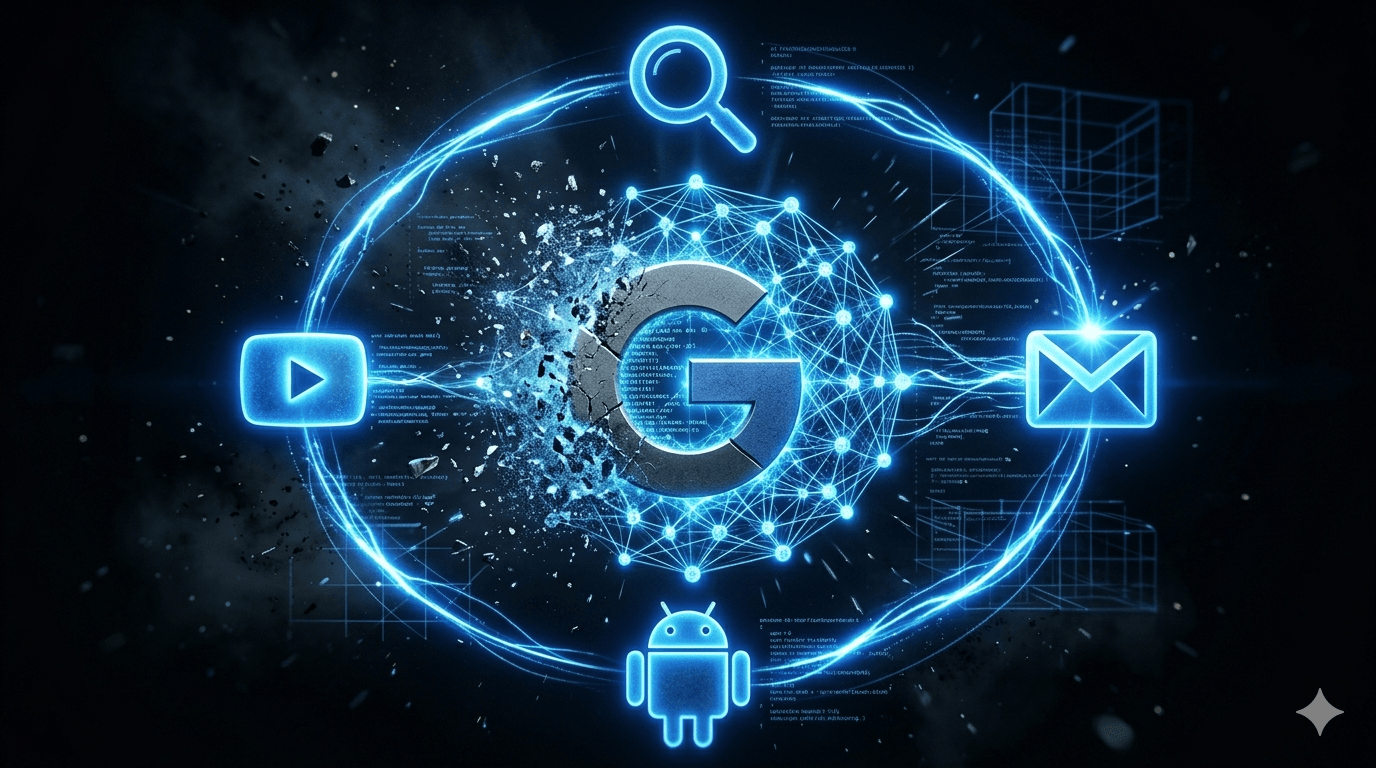
Google is no longer treating AI as a layer on top of its products. It is rebuilding the entire product stack around Gemini.
In plain terms — the Google you have used for the past 20 years is being replaced. Not with something foreign and unfamiliar, but with something that looks similar on the surface while being fundamentally different underneath. And since Google still controls massive distribution across search, mobile, email, browsers, video, and cloud — this change touches virtually every person who owns a smartphone or uses the internet.
Here is exactly what is changing and what it means for you.
Google Search Is No Longer Just a Search Engine
This is the change that affects the most people immediately.
When you type something into Google today, you get a list of links. You click one, read the page, come back, try another. That experience — which has been the same for over two decades — is being replaced.
Google’s new AI-powered Search uses Gemini to understand what you’re actually trying to accomplish — not just the words you typed — and gives you a direct, comprehensive answer built from multiple sources at once. Instead of ten blue links, you get a conversation.
What does this mean practically? If you search “what’s the best laptop for a student on a budget in Nigeria,” instead of getting a list of websites to browse through, you get a specific recommendation with reasoning, price context, and follow-up questions to narrow it down further.
For the average person this feels like an upgrade. For the millions of websites — including blogs like this one — that depend on Google sending them traffic, it is a serious challenge. When Google answers questions directly, fewer people click through to read the original sources. This is the tension at the heart of AI-powered search and it will reshape the internet over the next two to three years.
Your Android Phone Is Getting a Brain
Google introduced Gemini 3.5 Flash, Gemini Omni, Gemini Spark, AI coding tools, AI-generated interfaces, and new partnerships for Android XR glasses.
Let’s translate those product names into what they actually do on your phone:
Gemini Omni is the version of Google’s AI that can see, hear, and understand everything on your screen simultaneously. It can watch a video and explain it to you, read a document and summarise it, or look at a photo and answer questions about it — all in real time without you switching between apps.
Gemini Spark is the lighter, faster version designed to run efficiently on mid-range phones — meaning AI features that previously required a flagship device are coming to more affordable Android phones this year.
AI-generated interfaces means your phone’s apps will start rearranging and customising themselves based on what you do most. Your Gmail will look different from someone else’s Gmail because AI will organise it around your specific patterns.
The overall effect is a phone that feels less like a tool you operate and more like an assistant that anticipates what you need before you ask.
YouTube, Gmail, and Google Docs Are All Changing Too
Google’s AI push isn’t just about Search and Android. Every Google product you use daily is being rebuilt around Gemini:
YouTube — AI will now generate personalised video summaries, create automatic chapter markers, and let you ask questions about a video without watching the whole thing. Searching for information within long videos — tutorials, lectures, documentaries — becomes dramatically faster.
Gmail — Gemini now reads your emails and drafts intelligent replies that match your tone and communication style. It can summarise long email threads, flag what needs your attention, and handle routine responses automatically.
Google Docs and Workspace — AI assistance is now built directly into every document, spreadsheet, and presentation. It can write, edit, reformat, and analyse your work in real time based on simple instructions.
Google Shopping — AI now acts as a personal shopping assistant, comparing products across merchants, tracking price drops, and recommending based on your preferences and budget.
If you use any Google product for work, school, or daily life — and most people use at least three — your experience is changing significantly in the coming months.
What About Your Privacy?
This is the question that should accompany every Google announcement and this one is no exception.
For Gemini to personalise your Search, understand your Gmail, and anticipate what you need on your phone, it needs to process enormous amounts of your personal data. Your search history, your emails, your location, your YouTube watching habits, your shopping behaviour — all of it feeds the AI that is now running your Google experience.
Google’s position is that this data is processed securely and used only to improve your personal experience. They have strong financial incentives to maintain user trust on privacy — a major scandal would be catastrophic for a company whose entire business model depends on people using its products.
But the honest reality is that more AI integration means more data processing. The Google of 2026 knows significantly more about you than the Google of 2020. Whether that tradeoff — more personalisation in exchange for more data — is worth it is a decision only you can make.
What you can do right now: Go to myaccount.google.com and review your data and privacy settings. You can control what Google saves, what it uses for personalisation, and what it shares. Most people have never visited this page — most people should.
What This Means for the Rest of the Tech World
Google’s I/O announcements do not happen in isolation. When Google moves this aggressively, the entire industry responds.
Nvidia is tightening its grip on AI infrastructure and Saudi Arabia is pouring billions into compute — the global race to build the hardware that powers these AI systems is accelerating in direct response to announcements like yesterday’s.
Apple is watching closely. Its own AI push — including the iOS 27 changes we covered recently — is a direct competitive response to Google’s Gemini expansion. Microsoft is doing the same with Copilot. The consumer AI war is being fought on the surface of your phone screen, your search bar, and your email inbox.
You are not a spectator in this race. You are the prize. Every major tech company is competing to be the AI that runs your daily life. Understanding what each of them is offering — and what each of them wants in return — is increasingly one of the most important forms of digital literacy a person can have in 2026.
Google rebuilt everything yesterday. The changes will reach your phone, your search bar, and your inbox over the coming months — some subtly, some dramatically. Now you know what to expect, what to watch for, and what questions to ask about your privacy as it arrives.
If you found this useful, subscribe to our newsletter below and never be caught off guard by the technology that runs your world.