Hackers Just Used AI to Attack the Internet for the First Time Ever — Here’s What That Means for You
Something happened yesterday that security experts have been warning about for years — and most people have no idea it occurred.
Google reported the first known instance of criminal actors using AI to discover and weaponize a zero-day vulnerability, and the company successfully blocked the exploit.
This is a landmark moment in the history of cybersecurity. Not because of the attack itself — but because of what it signals about everything that comes next. The rules of digital security just changed permanently and every person who uses the internet needs to understand why.
What Is a Zero-Day Vulnerability and Why Does It Matter?
Before we get into the AI part, let’s make sure you understand what a zero-day vulnerability actually is — because this term gets thrown around a lot without explanation.
Every piece of software — your phone’s operating system, your browser, your banking app, the servers that run your favourite websites — is written by humans. Humans make mistakes. Those mistakes create weaknesses in the code called vulnerabilities.
A zero-day vulnerability is a weakness that the software maker doesn’t know about yet. The name comes from the fact that the developer has had “zero days” to fix it. When a hacker discovers one of these hidden weaknesses before the developer does, they can exploit it to break into systems, steal data, or cause damage — and the developer has no patch or fix ready because they don’t even know the problem exists.
Zero-day vulnerabilities are the most dangerous kind of security flaw precisely because there is no defence against them until they are discovered and patched. They are the master keys of the hacking world.
What Actually Happened Yesterday?
AI is now being weaponized by hackers in the first documented zero-day attacks, illustrating how AI is democratizing access to advanced attack techniques and forcing defensive teams to evolve their detection methods.
Here is what that means in plain English.
Finding a zero-day vulnerability used to require extraordinarily skilled hackers — people who could read millions of lines of complex code, understand how systems interact, and spot the tiny hidden flaw that nobody else had found. It was slow, expensive, and required rare expertise. This is why zero-day vulnerabilities historically came from nation-state hackers — government-sponsored teams with enormous resources and the best talent available.
AI has collapsed that barrier completely.
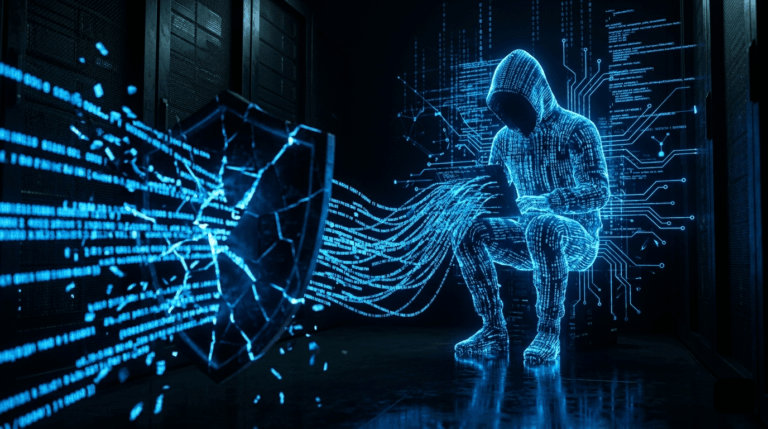
Yesterday, criminal actors — not a government, not an elite hacking team, but criminals — used AI to automatically scan code, identify a hidden vulnerability, and build an exploit to weaponize it. A process that might have taken a skilled human team months was compressed into a fraction of the time.
Google’s security team detected and blocked it. This time. But the significance of this moment is not about yesterday’s specific attack. It is about the fact that a capability that was previously restricted to the most sophisticated hackers on earth is now accessible to anyone with an AI tool and criminal intent.
What Does This Mean for Your Online Safety?
Let’s connect this directly to your daily life.
Every app and website you use is now at higher risk. Zero-day attacks used to be rare because finding them was hard. AI makes finding them dramatically easier. That means the volume of zero-day attacks will increase — and the apps, websites, and services you rely on daily will face more sophisticated threats more frequently.
Your bank, your email, your social media are all targets. The services holding your most sensitive data — your finances, your identity, your private communications — run on the same software that contains these hidden vulnerabilities. More zero-day attacks means more risk to the platforms you trust most.
Patches and updates matter more than ever. Google’s discovery of AI-powered zero-days accelerates the need for proactive AI defence strategies across the tech ecosystem. When software companies discover and fix vulnerabilities, they release updates. Every day you delay installing an update is a day you remain exposed to a known weakness. In the AI hacking era, that delay is more dangerous than it has ever been.
The gap between attack and defence is shrinking dangerously. Security teams at companies like Google are also using AI to defend against attacks. But yesterday’s news shows that attackers are using AI too — and the race between offence and defence has entered a new, more dangerous phase.
Six Things You Must Do Right Now to Protect Yourself
These are not optional suggestions. In the era of AI-powered hacking, these are the baseline requirements for staying safe online:
1. Turn on automatic updates everywhere. On your phone, your laptop, your apps — turn on automatic updates today. When a zero-day is discovered and patched, the update reaches you immediately rather than waiting until you manually check. Go to your phone Settings right now and confirm auto-updates are enabled.
2. Use unique passwords for every account. When one service is breached via a zero-day attack, hackers try the stolen passwords on every other major platform. If you use the same password everywhere, one breach becomes total exposure. Use a password manager like Bitwarden — it’s free — to generate and store unique passwords automatically.
3. Enable two-factor authentication on your most important accounts. Your email, your bank, your WhatsApp. Two-factor authentication means that even if a hacker gets your password through a zero-day breach, they still cannot access your account without the second verification code.
4. Be extra cautious with banking and financial apps. In the days and weeks following news of a major AI-powered attack, be particularly alert for unusual activity in your financial accounts. Check your statements. Enable transaction notifications if you haven’t already.
5. Use a reputable browser and keep it updated. Your browser is one of the most targeted pieces of software on your device. Chrome, Firefox, and Edge all have strong security teams constantly patching vulnerabilities. Keep whichever you use fully updated.
6. Be suspicious of urgent security warnings that appear on screen. A common follow-up to major security news is fake “your device has been compromised” pop-ups designed to panic users into downloading malware. Real security issues are communicated through your device’s official update system — not through alarming website pop-ups.
The Bigger Picture — We Are In a New Era
Yesterday’s news is a turning point. The case illustrates how AI is democratizing access to advanced attack techniques, adding urgency to collaborative efforts between Big Tech, governments, and startups on cybersecurity standards.
For years, the most dangerous cyber weapons were in the hands of governments and elite criminal organisations. AI is redistributing that power in ways that benefit attackers — at least in the short term. The defensive side of cybersecurity is racing to catch up using the same AI tools, and companies like Google are already doing extraordinary work detecting threats that would have been invisible before.
But the individual — the everyday person using a smartphone, a laptop, and a banking app — sits at the end of this chain. The best protection available to you right now is not sophisticated technology. It is awareness, good habits, and taking the basic steps outlined above seriously.
The internet got a little more dangerous yesterday. The good news is that protecting yourself doesn’t require technical knowledge — it requires attention.
We help you understand what’s actually happening in the technology that runs your life, so you can make informed decisions about your safety.
Subscribe to our newsletter below. Every week we track the tech stories that matter — the ones that affect your security, your privacy, your money, and your daily life — and we give you clear, practical steps to navigate them. No jargon. No panic. Just clarity.