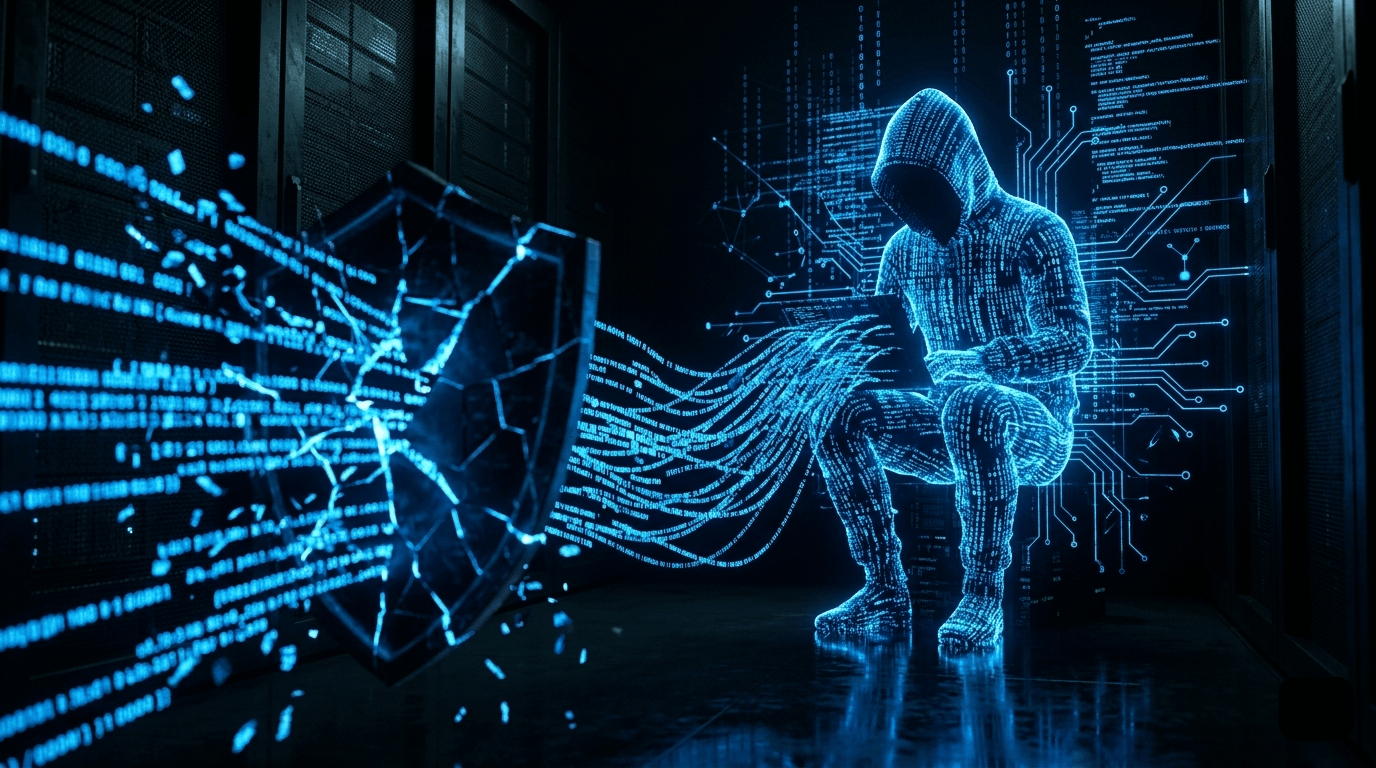
Hackers Are Now Using AI To Attack You — Here’s What’s Changed and How To Stay Safe
Cybercrime used to require technical skill. In 2026, it requires a laptop and an AI subscription.
Incident response and threat intelligence sources now link widespread use of AI and automation to faster reconnaissance, more convincing phishing, and shorter times from initial compromise to data theft. In some cases, exfiltration is compressed from days to hours.
In plain language — hackers are now using the same AI tools available to everyone to attack people faster, more convincingly, and at a scale that was impossible just two years ago. If you’ve ever clicked a suspicious link, received a strange email, or gotten an unexpected call from your “bank” — this post is for you.
How AI Has Changed Hacking
Before AI, a convincing phishing email took time and skill to craft. Hackers had to write believable messages in perfect English, research their targets manually, and send attacks one at a time. Most phishing emails were easy to spot — bad grammar, generic greetings, obvious lies.
AI changed all of that overnight.
AI has significantly lowered the technical proficiency needed for a threat actor to exploit systems. Complex ransomware operations, precision-targeted phishing attacks, and stealthy zero-day exploits are becoming everyday realities.
Today a hacker can:
- Use AI to write a perfectly personalised phishing email in any language in seconds
- Generate a convincing deepfake voice call pretending to be your bank manager
- Create a fake video of a family member asking for urgent money
- Automate thousands of attacks simultaneously at almost zero cost
- Research your social media profile and craft a message that references real details of your life
Data brokers quietly collect and sell personal information creating detailed profiles that fuel scams, identity theft and AI-powered deepfake phone fraud. The personal information already floating around the internet about you makes AI-powered attacks far more convincing than anything that came before.
The Three AI Attacks Most Likely To Hit You
1. AI Voice Cloning Scams Criminals record just a few seconds of someone’s voice from a social media video and use AI to clone it perfectly. They then call family members pretending to be that person in an emergency — stranded abroad, in hospital, in trouble — and request urgent money transfers. This is happening in Nigeria right now.
2. Hyper-Personalised Phishing Instead of generic “Dear Customer” emails, AI now crafts messages that mention your real name, your bank, your recent purchases, and local details that make them feel completely legitimate. The tell-tale signs of old phishing emails — bad grammar, generic greetings — are gone.
3. Deepfake Video Fraud Video calls with people who look and sound exactly like your boss, your bank manager, or a government official — but aren’t. Several companies have already lost millions to fraudsters using deepfake video in fake executive calls requesting urgent wire transfers.
Seven Things You Can Do Right Now To Protect Yourself
1. Create a family safe word. Agree on a secret word with close family members that anyone can use to verify a real emergency call. If someone calls claiming to be family in crisis, ask for the safe word. A deepfake won’t know it.
2. Pause before you click anything. AI phishing emails now look completely legitimate. The rule is simple — never click a link in an email or message. Instead, open your browser and go directly to the website yourself.
3. Enable two-factor authentication everywhere. On your email, your bank app, your social media. Even if a hacker gets your password, they cannot access your account without the second verification code sent to your phone.
4. Be suspicious of urgent requests. AI scams almost always create false urgency — “act now,” “your account will be closed,” “emergency transfer needed.” Real institutions give you time to verify. Urgency is a manipulation tactic.
5. Limit what you share publicly. Your phone number, your address, your daily routine, your family members’ names — the less that’s publicly visible on your social media, the less ammunition AI has to craft a convincing attack against you.
6. Verify unexpected calls independently. If your bank calls you, hang up and call them back on the official number from their website. Do not use any number given to you by the caller.
7. Keep your software updated. AI and automation are shrinking time-to-exploit to hours or minutes — which means software vulnerabilities are being exploited faster than ever. Updates patch those vulnerabilities. Turn on automatic updates on your phone and computer.
The good news is that awareness is your most powerful defence. The people most vulnerable to AI-powered attacks are the ones who don’t know they’re happening. Now you know. Share this post with someone who needs to read it.
Subscribe to TouchTech below — we track the threats that matter to everyday people and give you clear, practical steps to stay safe every single week.