Self-Driving Cars Are Now Sharing Roads With Regular People — Here’s What You Need To Know
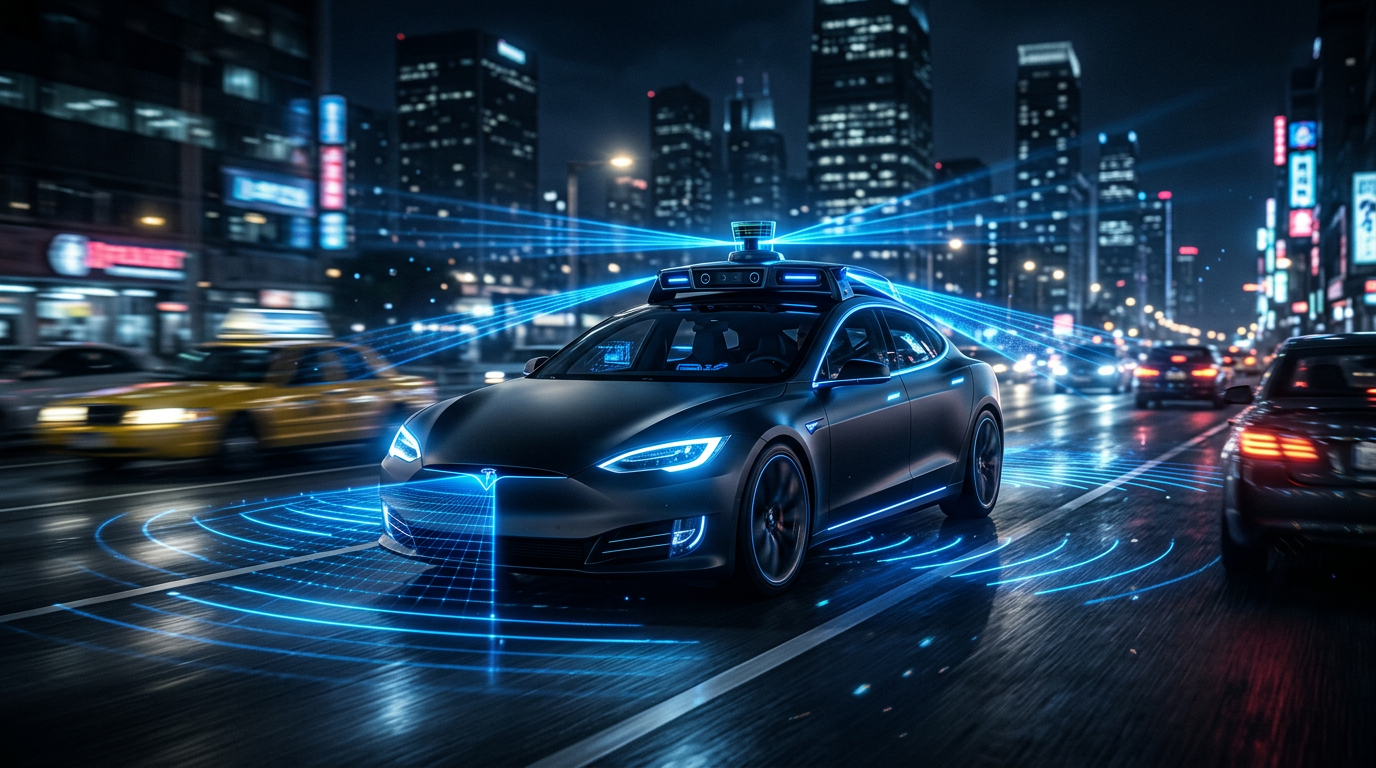
Not long ago, self-driving cars were something you’d see in a sci-fi movie. In 2026, they are sitting in traffic next to regular drivers in real cities — and that number is growing fast.
Autonomous vehicles are no longer confined to test zones. In 2026, many developed cities will see them as part of ordinary traffic. Waymo, backed by Google, has already opened its robotaxi service to the public in San Francisco and expanded across Los Angeles, and this year its cars are expected to appear in Washington, New York and London.
This is not a pilot programme. This is not a test. This is the real thing — and whether you live in a city that already has them or not, this technology is heading your way faster than most people realise.
What’s Actually Happening Right Now?
The self-driving car story in 2026 is being written by two main players — American companies and Chinese companies — and they are moving at extraordinary speed simultaneously.
On the American side, Waymo — owned by Google’s parent company Alphabet — is leading the charge. Their fully driverless robotaxis are now commercially available to the public in multiple major US cities. You open an app, request a ride, and a car with no human driver arrives to take you to your destination. No steering wheel being touched. No one in the front seat.
Chinese firms are moving just as fast. Baidu’s Apollo Go has launched in Dubai and Abu Dhabi. WeRide operates in the Gulf and Singapore. Several Chinese developers plan European rollouts including services in Germany.
What this means practically is that in 2026, for the first time, large numbers of people will encounter driverless cars on routine journeys. Not as a novelty — as normal transport.
Is It Actually Safe?
This is the question everyone asks first — and rightly so.
The honest answer is: safer than most people expect, but not without incidents.
Waymo’s publicly available data shows their vehicles have significantly fewer accidents per mile than human drivers in comparable conditions. The cars don’t get tired, don’t get distracted by phones, don’t drink and drive, and don’t get road rage. On those metrics, they outperform the average human driver consistently.
However, edge cases remain a challenge. Unusual road situations, unexpected weather, construction zones, and interactions with unpredictable human drivers still cause problems that purely algorithmic systems struggle with. The cars are not perfect — they are just statistically safer than us on most days.
The bigger safety question is not whether the cars crash — it is who is legally responsible when they do. If a self-driving car hits someone, is it the manufacturer, the software company, the city that licensed it, or the passenger? These legal frameworks are still being written and differ from country to country.
What Does This Mean For Your Daily Life?
Even if you never ride in a self-driving car personally, this technology will reshape your daily life in ways most people haven’t considered:
Your commute costs will change. Robotaxis have no driver to pay. Once the technology scales, ride-hailing prices will drop significantly — Uber and Bolt will face enormous pressure to compete with driverless alternatives that have lower operating costs.
Driving jobs are under direct threat. Taxi drivers, ride-hailing drivers, delivery drivers, and eventually truck drivers are the most directly affected workforce. The technology boom continues to reward a small group at the top while displacing workers whose entire livelihood depends on being behind a wheel. This is not a distant future problem — it is beginning now.
Car ownership may become less necessary. If you can summon a reliable, affordable, driverless car within minutes at any time, the argument for owning a car weakens significantly — especially in cities. This will affect everything from car manufacturers to insurance companies to car loan businesses.
Road design will eventually change. Cities built around human drivers — with traffic lights timed for human reaction speeds, road widths designed for human error margins, and parking lots everywhere — will slowly be redesigned around autonomous vehicles. This takes decades but the planning is beginning now.
Insurance will transform. Car insurance is currently priced around human risk — your age, your history, your behaviour. When the car drives itself, the risk profile changes completely. Expect insurance models to shift dramatically over the next five years.
When Will This Affect Nigeria and Africa?
Fair question — and one most global tech coverage ignores.
The honest answer is: not immediately for full autonomous vehicles on Nigerian roads, but sooner than you might think for the economic ripple effects.
The disruption to driving jobs and the transport industry is global. As autonomous vehicle technology matures in developed markets, it creates competitive pressure on traditional transport businesses everywhere. Nigerian ride-hailing platforms like Bolt will face pricing pressure from international operators bringing driverless technology to emerging markets.
More immediately, the driver assistance features that come from autonomous vehicle research — automatic emergency braking, lane keeping assistance, blind spot detection — are already filtering into more affordable vehicles available in Nigeria. These technologies save lives and are becoming standard even in mid-range cars.
The full self-driving future is coming to African cities — the question is when, not if. Lagos, Nairobi, and Accra are already on the expansion roadmaps of several autonomous vehicle companies looking at emerging markets for their next phase of growth.
CLOSING / CALL TO ACTION
Self-driving cars are no longer a technology story — they are a society story. They will reshape jobs, cities, insurance, transport costs, and road design in ways that touch every single person whether they ever sit in a driverless car or not.
At TouchTech we track exactly these kinds of shifts and translate them into what they mean for your life, your career, and your decisions. Subscribe to our newsletter below and stay informed every single week. No jargon. No fluff. Just the stories that matter — explained clearly.